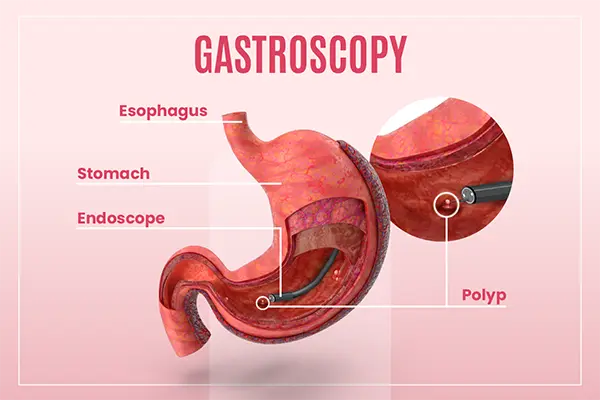
In digestive endoscopy, patient positioning is crucial not only for safety and comfort but also for visibility and procedural efficiency. The orientation of the gastrointestinal tract changes with body position, so gastroscopy and ERCP often require different approaches.
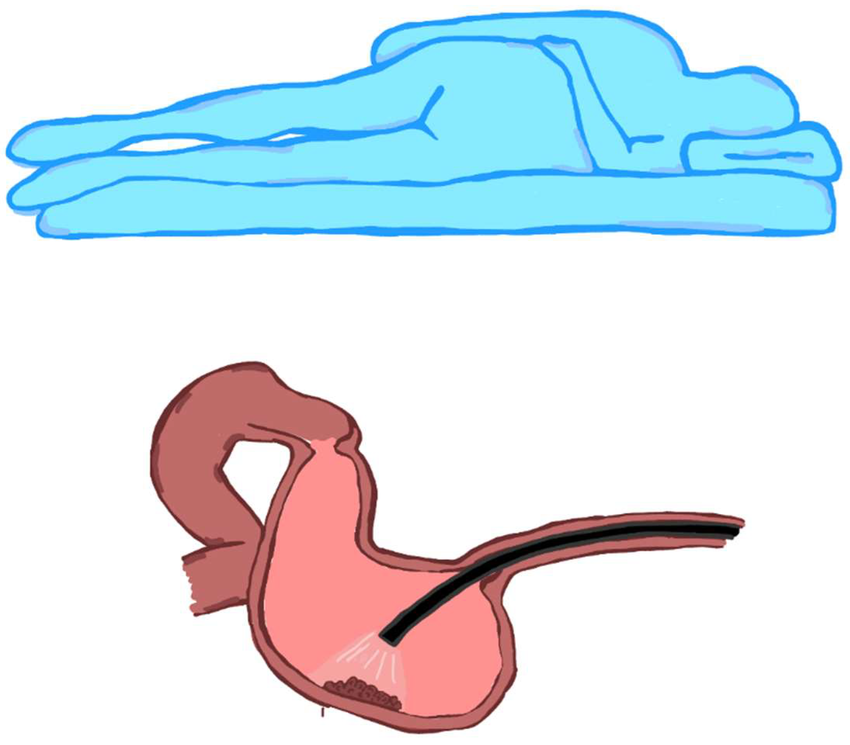
Gastroscopy: Left Lateral Position
For most gastroscopy procedures, the left lateral position is standard.
- Anatomical and procedural advantages: Fluids and secretions naturally pool in the lower stomach, reducing the risk of aspiration and gagging.
- Endoscope advancement: The scope follows the natural curvature of the stomach, allowing smoother navigation into the antrum and pylorus.
- Clinical applications: Routine screening and diagnosis of gastritis, ulcers, tumors, and upper GI bleeding.
The left lateral position is not only standard in clinical practice but also the foundation in gastroscopy training.
ERCP: Prone Position
Unlike gastroscopy, ERCP typically requires the prone position.
- Anatomical exposure: The descending duodenum and papilla are better visualized, aiding in accurate localization.
- Cannulation ease: Scope rotation and angulation align naturally with bile duct cannulation techniques.
- Alternative positions: In some cases, semi-prone or right lateral positions may be used, though less commonly.
ERCP training models allow repeated practice of papilla exposure and cannulation across different positions, helping shorten the learning curve.
Positioning directly affects scope navigation and visibility, making it a core skill in endoscopy training.
The Importance of Position Training
For beginners transitioning from gastroscopy to ERCP, adapting to different positions is a common challenge. Without sufficient practice, complications may include:
- Difficulty reaching the duodenum
- Trouble locating the papilla
- Failed cannulation, longer procedure time, increased risk
Whether performing routine gastroscopy or advanced ERCP, patient positioning is critical. The left lateral position provides a safe and smooth path for gastroscopy, while the prone position opens access to the bile and pancreatic ducts for ERCP. Repeated practice with gastroscopy simulators and ERCP training models equips physicians to master positioning, ensuring safer and more effective clinical procedures.